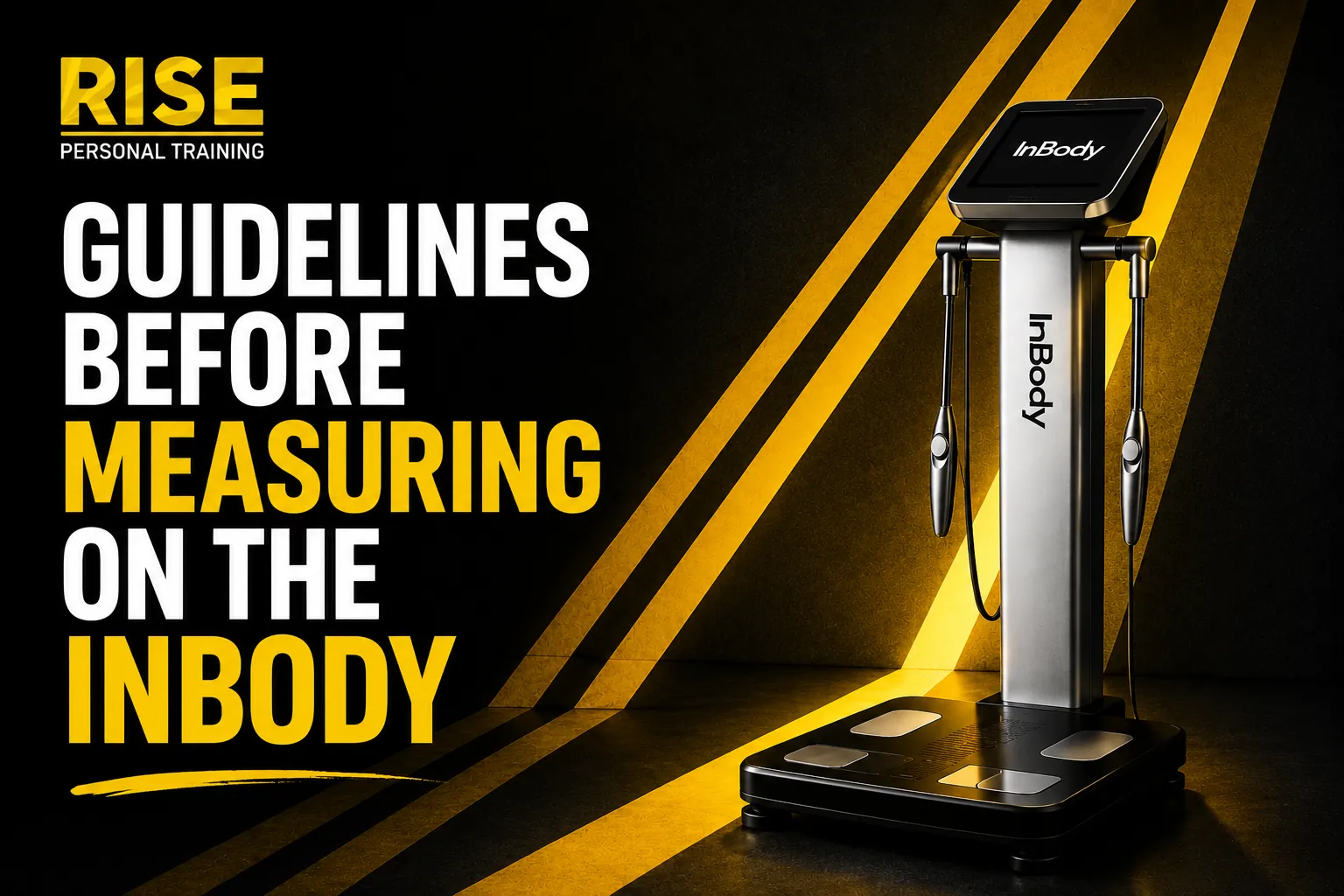
Guidelines Before Measuring on the InBody
Learn the proper preparation steps to ensure accurate and reliable InBody body composition measurements at Rise Personal Training.
Getting an accurate body composition analysis with the InBody 270 requires proper preparation. Follow these guidelines before your measurement to ensure the most reliable results.
Pre-Measurement Preparation
To get the most accurate and reliable measure of your body composition, we recommend following these guidelines before your InBody analysis:
- Don't eat 3-4 hours before measuring — An empty stomach ensures accurate readings
- Avoid excess water consumption — Hydration can affect body composition measurements
- No lotions or ointments on hands and feet — These can interfere with the electrical conductivity needed for accurate readings
- Stand upright for about 5 minutes before — Allow your body to settle into a natural state
- Measure before your training session — Post-workout measurements can be skewed by fluid shifts
- Remove all items that add weight — Take off hats, glasses, bracelets, watches, and any metal objects
- Use the restroom prior to measuring — This ensures the most accurate body weight
- Women: Do not measure during menstruation or while pregnant — Hormonal changes and pregnancy alter body composition readings
Consistency for Re-Measurements
To get the most reliable results when you re-measure, we highly recommend that you remeasure on the same day and time as your previous measurement. This consistency helps us track real changes in your body composition over time.
Good news: Members can come in during any regular hours to do your InBody measurements. No appointment needed!
Factors That Can Affect Accuracy
Several factors can impact the accuracy of your re-measurements. Be aware of these before your next test:
- Hard training session — Intense workouts the day of or day before can affect readings due to inflammation and fluid shifts
- Digestion — The timing of your last meal matters (remember: 3-4 hours fasted is ideal)
- Injury or inflammation — Any injury causing swelling will affect body composition readings
- Excess caffeine — Can increase dehydration and affect measurements
- Sodium intake and water retention — High sodium can cause water retention, skewing results
After Your Measurement
Please see your Coach after testing to go over your results! Your coach can help you interpret your body composition data and adjust your training and nutrition plan accordingly.
The InBody is a powerful tool for tracking your progress beyond just the scale. By following these guidelines and working with your coach, you'll get the most accurate picture of your body composition changes.

Ryan Sellz
Founder of Rise Personal Training
View Author Profile →