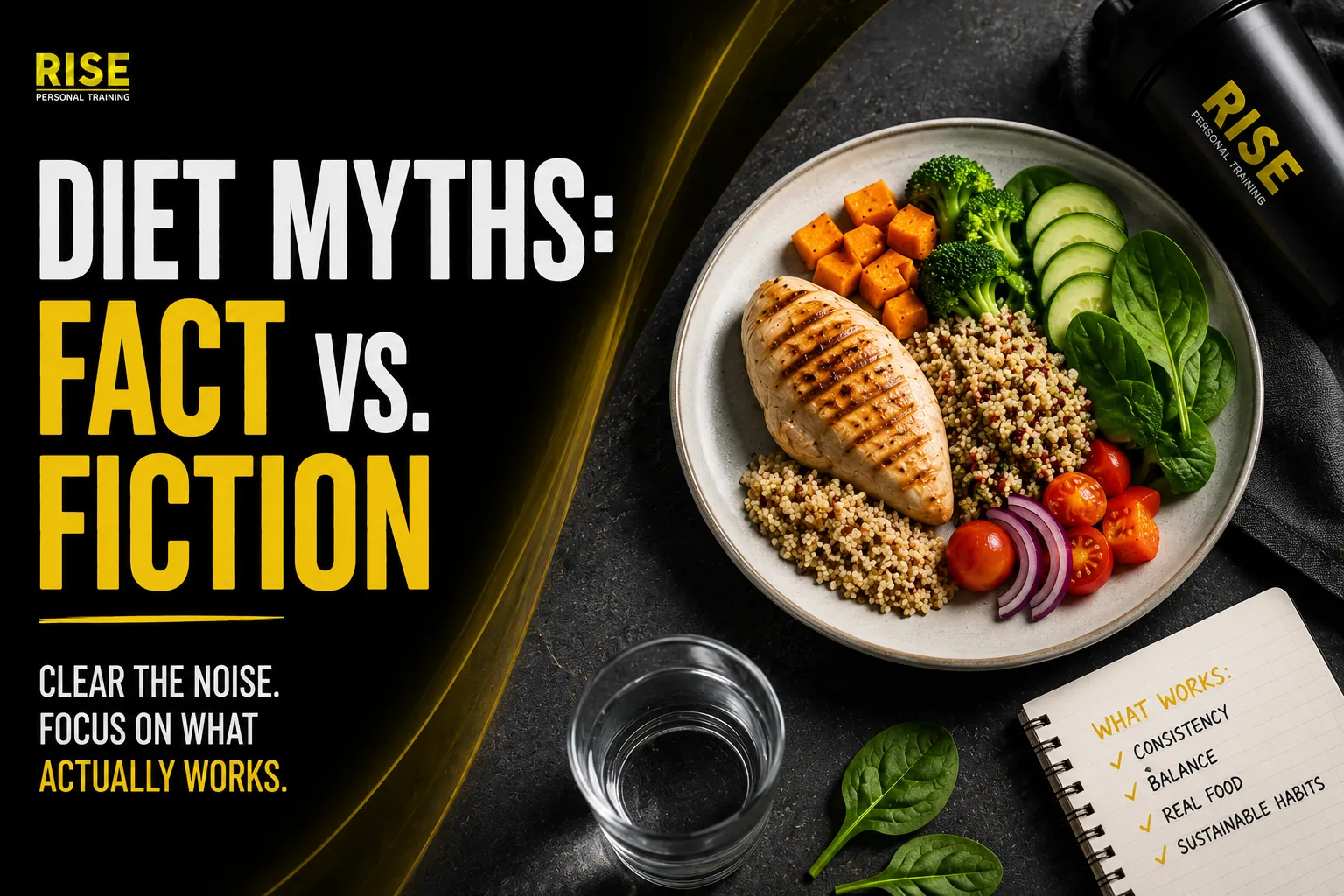
Diet Myths: Fact vs. Fiction
Discover the truth about popular diets and learn how to build sustainable eating habits that actually work for long-term results.
There's no shortage of nutrition advice online. Every week it seems like there's a new diet promising fast results.
Keto. Carnivore. Vegan. Low carb. Clean eating.
The truth is, most diets aren't magic. They simply give people more structure and make them pay closer attention to what they're eating.
If you're looking for long-term results, the goal isn't finding the "perfect" diet. It's building eating habits you can actually stick with.
Stop Thinking About "Going on a Diet"
The word "diet" usually makes people think about temporary changes.
You cut out your favorite foods, follow strict rules for a few weeks, lose some weight, then slowly fall back into old habits.
Instead of asking, "What's the best diet?"
Ask yourself:
"What way of eating could I realistically maintain for years?"
That's where lasting results come from.
Why Most Diets Work... At First
Many popular diets lead to quick progress, but not always for the reasons people think.
When someone starts a new diet, they're usually:
• Paying more attention to what they eat • Eating fewer processed foods • Increasing protein • Eating fewer calories overall
Those habits create results more than the name of the diet itself.
Nutrition Isn't One Size Fits All
Different diets work well for different people.
Some people feel great eating lower carb.
Others perform better with more carbohydrates.
Some enjoy eating mostly plant-based, while others feel better including meat in their meals.
Your goals, lifestyle, culture, food preferences, and schedule all play a role in finding what works best for you.
Structure Is Helpful. Restriction Usually Isn't.
Having a plan is important.
Feeling trapped by your nutrition isn't.
The more restrictive a diet becomes, the harder it is to maintain. Eventually most people burn out because they feel like they can never enjoy the foods they love.
A better approach is to build a flexible routine that gives you consistency while still leaving room for real life.
Aim for Balance
One meal won't make or break your progress.
Neither will one weekend.
Try to eat mostly whole, nutritious foods throughout the week, but don't feel guilty for enjoying dessert, pizza, or a meal out with friends.
A simple guideline is:
Eat well most of the time, and enjoy life the rest of the time.
Consistency always beats perfection.
What About Clean Eating?
For most people, clean eating simply means eating more foods that are close to their natural form.
Think:
• Fruits • Vegetables • Lean proteins • Whole grains • Beans • Nuts
That doesn't mean packaged foods are automatically "bad."
It's about making whole foods the foundation of your nutrition while understanding that convenience foods can still have a place.
Don't Fear Every Ingredient
Nutrition on social media can make it seem like every ingredient is dangerous.
The reality is much more balanced.
Not every long ingredient list is harmful, and not every food with one ingredient is automatically better.
Instead of worrying about every buzzword, focus on the bigger picture:
• Eat more whole foods. • Get enough protein. • Stay active. • Be consistent.
Those habits will have a much bigger impact on your health than chasing the latest nutrition trend.
The Bottom Line
The best nutrition plan is the one you can follow long after the excitement of a new diet wears off.
Build habits that fit your life.
Focus on progress instead of perfection.
And remember, sustainable nutrition isn't about following strict rules. It's about creating a healthy lifestyle you can enjoy for years to come.

Ryan Sellz
Founder of Rise Personal Training
View Author Profile →