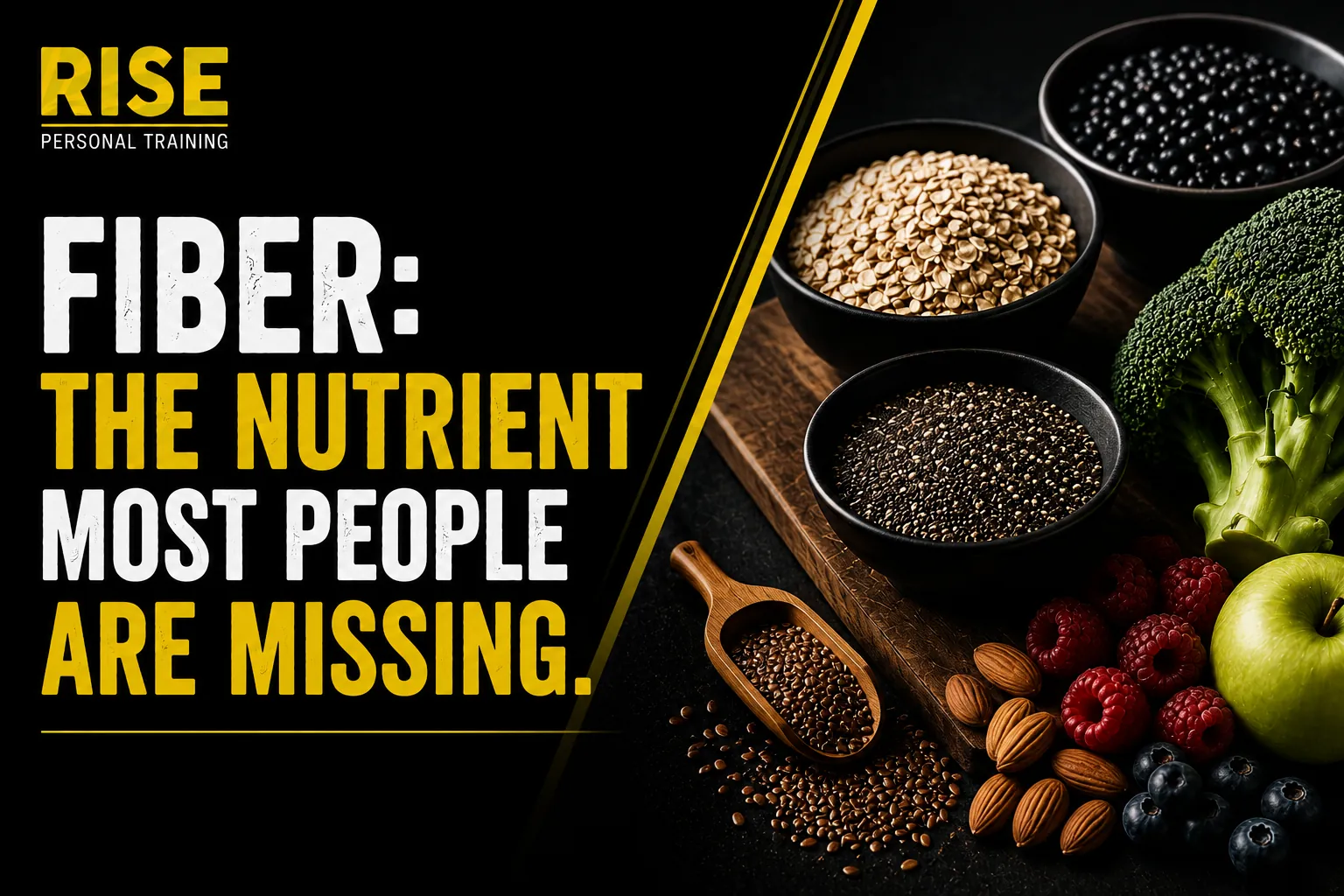
Fiber: The Nutrient Most People Are Missing
Learn why fiber is one of the most important nutrients for your health, how much you need, and the best whole foods to add to your diet.
When people think about nutrition, they usually focus on protein, calories, or carbohydrates. But one nutrient often gets overlooked, and it has a huge impact on your health.
That nutrient is fiber.
In fact, most Americans aren't getting enough fiber every day. The good news is that adding more doesn't have to be complicated.
Why Is Fiber So Important?
Fiber does a lot more than help with digestion.
Getting enough fiber can:
- Help you stay full longer
- Support healthy blood sugar levels
- Improve heart health
- Keep your digestive system running smoothly
- Support healthy gut bacteria
If your goal is fat loss, fiber can be especially helpful because it helps you feel satisfied after meals, making it easier to avoid unnecessary snacking.
The Two Types of Fiber
There are two main types of fiber, and both play an important role.
Soluble fiber dissolves in water and forms a gel-like texture during digestion. It can help manage cholesterol and keep blood sugar more stable. Good sources include oats, beans, chia seeds, and fruit.
Insoluble fiber adds bulk to your stool and helps food move through your digestive system. You'll find it in vegetables, whole grains, nuts, seeds, and many legumes.
The good news is you don't have to worry about tracking each type. Eating a variety of whole foods will naturally give you both.
How Much Fiber Do You Need?
A good daily goal is:
- Women: about 25 grams per day
- Men: about 35 to 40 grams per day
If you're nowhere near those numbers, don't stress. The goal isn't to be perfect overnight. Just work on adding a little more each day.
The Best Foods for Fiber
Whole foods should be your first choice whenever possible.
Some of the best sources include:
- Beans and lentils
- Blackberries and raspberries
- Avocados
- Oats
- Chia seeds
- Flax seeds
- Hemp seeds
- Vegetables
- Whole grains
- Quinoa
- Barley
Frozen vegetables are another great option. They're convenient, affordable, and make it easy to add more fiber to your meals without worrying about food going bad.
What About Fiber Supplements?
Supplements can be helpful if you're struggling to hit your daily goal.
Products like psyllium husk or foods with added fiber can help fill in the gaps, but they shouldn't replace fruits, vegetables, legumes, and whole grains whenever possible.
Whole foods provide vitamins, minerals, and other nutrients that supplements simply can't match.
Increase Fiber Slowly
One mistake people make is trying to go from almost no fiber to a high-fiber diet overnight.
That usually leads to bloating, gas, and stomach discomfort.
Instead, increase your intake gradually and make sure you're drinking enough water. Your body will adjust over time, and you'll feel much better than if you make a huge jump all at once.
Simple Ways to Eat More Fiber
Adding fiber doesn't have to mean changing your entire diet.
Try a few of these ideas:
- Add berries to your breakfast
- Mix chia or flax seeds into yogurt or smoothies
- Add beans to salads, bowls, or tacos
- Swap white rice for quinoa or add both together
- Include a serving of vegetables with lunch and dinner
- Slice avocado onto toast, eggs, or sandwiches
Small changes throughout the day add up quickly.
The Bottom Line
Fiber is one of the easiest nutrition habits to improve, and it can make a big difference in how you feel.
It supports digestion, helps control hunger, improves heart health, and makes it easier to stick to your nutrition goals.
If you're not getting enough today, don't worry about being perfect. Start by adding one or two high-fiber foods to your meals each day, stay consistent, and build from there.
Sometimes the smallest habits lead to the biggest results.

Ryan Sellz
Founder of Rise Personal Training
View Author Profile →