What Should You Eat Before a Workout?
Learn what to eat before a workout, when to eat it, and how carbohydrates, protein, and creatine can support better training and recovery.
One of the most common questions we get is: What should I eat before I work out?
The answer does not have to be complicated. You do not need a perfect meal plan or expensive supplements. You just need to understand how your body uses energy and give it the fuel it needs to perform.
Your Body Has Different Engines
Think of your body like it has three different vehicles. The first is a sports car. It takes off fast and gives you a quick burst of power. This is what helps during those first few heavy reps or short, explosive movements. Next comes the everyday car. This is what carries you through most of your workout. When you start feeling your muscles burn during a set, this system is doing the work, and it runs mostly on carbohydrates. The last one is more like a semi truck. It takes longer to get going, but it can keep moving for a long time. This system is used more during longer, lower-intensity activities like walking or steady cardio. For most strength workouts, your body relies heavily on those first two systems.
Why Eating Before Your Workout Matters
If you have ever walked into the gym feeling sluggish, there is a good chance your body just needed some fuel. Carbohydrates are your body's preferred source of energy during most strength training sessions. Eating some before your workout can help you have more energy, lift heavier, get through your workouts with less fatigue, and perform better from your first set to your last. Better workouts usually lead to better results.
When Should You Eat?
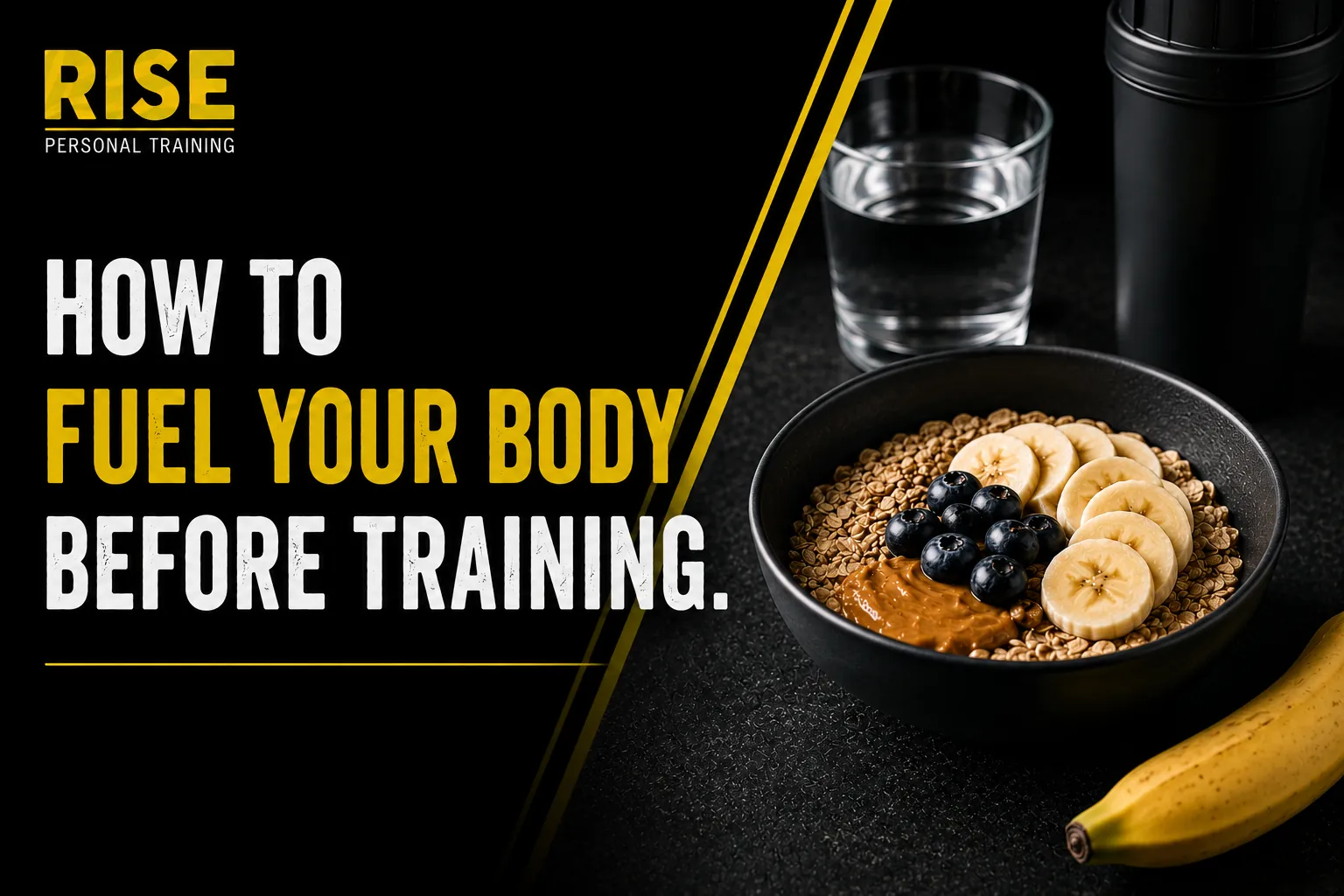
A good goal is to have a balanced meal about 2 to 4 hours before your workout. That meal should include protein, carbohydrates, and healthy fats. Sometimes life gets busy and that is not realistic. If you are heading to the gym after work and your last meal was lunch, do not skip eating altogether. Instead, have a small snack about 30 to 60 minutes before your workout. Some easy options include a banana, a handful of pretzels, dried fruit, a few pieces of watermelon, applesauce, or a small sports drink if you have gone a long time without eating. The closer you are to your workout, the easier that food should be to digest.
What About Protein?
Protein is important, but it digests more slowly than carbohydrates. If you are eating close to your workout, a heavy protein meal might leave you feeling too full. A protein shake can work well because it is easier to digest than a full meal, but if you are only choosing one thing right before training, carbohydrates are usually the better choice for workout performance.
Do You Need Creatine?
Creatine is one of the most researched supplements available, and for good reason. It helps support those short, powerful efforts like heavy lifts and explosive movements. Think of it as giving your body's quick energy system a little more fuel. If you are strength training consistently, creatine is worth considering.
What Should You Eat After Your Workout?
After training, your goal is simple. Eat a balanced meal that includes protein to help repair and build muscle, carbohydrates to replace the energy you used, and healthy fats to round out the meal. If you trained later in the evening and already had dinner, you may not need another full meal. But if you are feeling drained the next day or struggling to recover, adding a small snack or protein shake after your workout can help.
Find What Works for You
Everyone is different. Some people can eat a full meal two hours before training and feel great. Others need a lighter meal or snack. The best approach is to pay attention to how you feel. Try different meal timings, notice your energy during workouts, and stick with what helps you perform your best. There is not one perfect strategy for everyone. The goal is simply to give your body the fuel it needs so you can train hard, recover well, and keep making progress.

Ryan Sellz
Founder of Rise Personal Training
View Author Profile →